Vidyamala
Mentor
I first met Vidyamala in the late nineties at the Manchester Buddhist Centre (MBC). She had recently moved from Wales, where she taught meditation at a retreat centre to live in Manchester, attend events at the MBC, and serve as one of the Centres trustees.
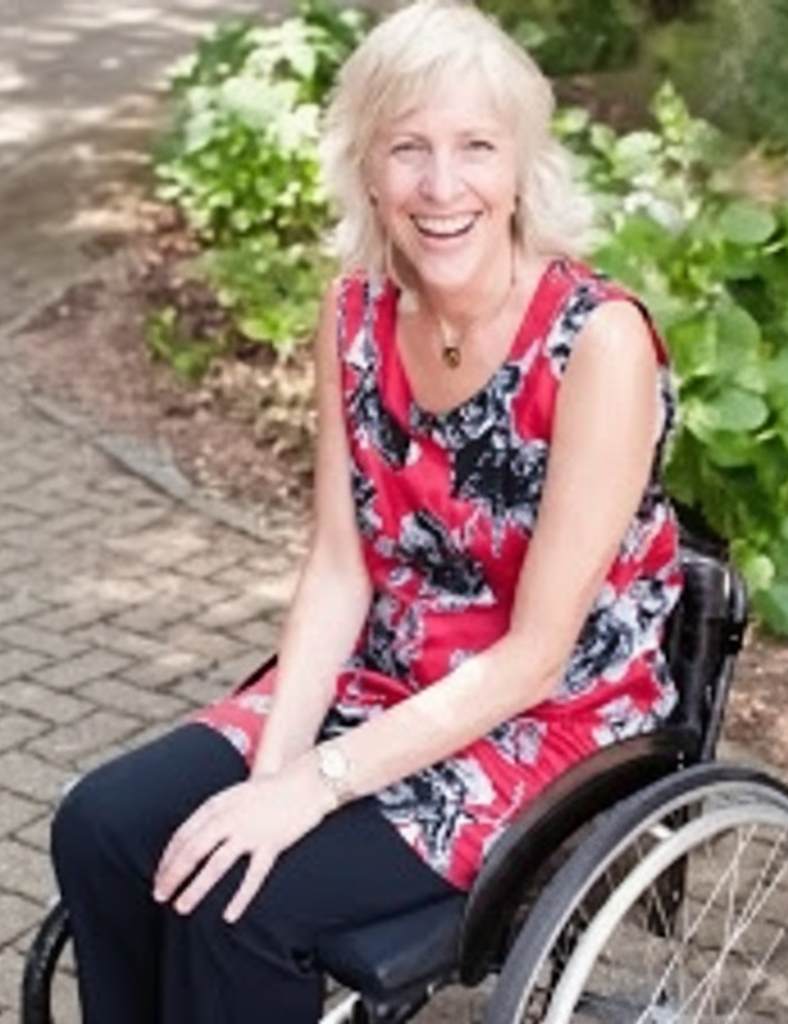
In 2000, Vidyamala who is a partial paraplegic living with a congenital disability and I, a person living with Cerebral Palsy (right-side hemiplegia), came together to start a project she initially called 'Peace of Mind'. Vidyamala is originally from New Zealand, and although I am British by birth I was considered an 'international' student due to my extended time living and working in the United States prior to returning to England in 1996 to continue my postgraduate education at the University of Manchester (UMIST) with a focus on industrial and occupational psychology with an interest and research focus on disability inclusion in the workplace.
What Vidyamala and I shared was that we had both independently turned to meditation and mindfulness as ways of managing our physical disabilities. For different reasons, neither of us had been able to access support to manage our conditions from the National Health Service(NHS) when we moved to England. However, we both independently sought complementary approaches to managing our conditions.
In the early nineties, before I returned to live and work in Manchester, England I turned to American Whole Health in Chicago, Illinois aka Wholehealth Chicago, Illinois (“The Midwest’s oldest and most respected center for integrative care, successfully blending the latest advances in conventional medicine with a wide range of clinically proven alternative therapies”) for support. This is where while living in Chicago I was treated by Dr David Edelberg, MD, the Centre's founder and Medical Director while also regularly being treated by Dr Kimberly Beith, a chiropractor and acupuncturist, who practiced under Dr Edelberg MD, before she went on to start her own business, Total Wellness Chiropractic Clinic in Chicago, Illinois, and where the late Alan Uretz worked before he went on to be appointed Dean of Medicine, Midwest College of Oriental Medicine in Chicago. Alan was my first tai chi teacher instructor, and I am very grateful to introducing this practice to me.
In 2000 Vidyamala learned about my disability inclusion work while working for Workable. Vidyamala asked if I would work with her, to be her mentor on a project which would enable her to get a grant she would not otherwise be eligible to apply and obtain on her own, a Scope “Give it a Go Millennium Award Scheme”, which she wanted to be awarded to finance her “Peace of Mind” pilot project. As she put it at the time, “You’ve inspired me not only to get back into the workplace, but how to do it sustainably.”
Vidyamala recognized that despite not having an academic background, training or experience working with people with disabilities she could teach other disabled people like herself the meditation and mindfulness techniques she had been taught over the years helping her to alleviate the suffering of those facing challenges. I agreed to mentor and support her by connecting her with the: hardware, software, and financial resources and networks she needed to establish her pilot project now known as Breathworks aka Breathworks-Mindfulness, and write a pamphlet about her project work, which formed the foundation of her first book published by Sounds True, Boulder, Colorado in 2010 Living Well with Pain and Illness: the Mindful Way to Free Yourself from Suffering.
Vidyamala also owes the success of her business to both Sona Fricker and Gary Hennessey, both experienced mindfulness practitioners and teachers within the Friends of the Western Buddhist Order (FWBO) aka Triratna and the backing and support this religious organization. With the support of these two friends Vidyamala went on to develop a train-the-trainers programme which forms one of the backbones of their work today. A model and framework I first exposed Vidyamala after I co-created a train-the-trainers programme in 1998 for the Workable Centre Network (WCN)- Europe project as part of my work as the European networks lead partner.
Today, Breathworks foundation is part of a Community Interest Company (CIC) - a highly successful international organisation offering mindfulness-based approaches to living well with pain, stress, and illness.